
Planning a trip involves more than just picking a route and packing snacks.
Before you hit the road, make sure your adventure doesn’t stall at the first border. From baffling border insurance and weird laws with heavy fines, to paperwork pitfalls and drug dos and don’ts, a bit of preparation can save a lot of stress.
You don’t know what you don’t know — and when crossing borders, that can cost you dearly. Sometimes, even common items like everyday over-the-counter painkillers, which seem innocuous at home, can lead to hefty fines or even jail time abroad. Read this guide and you will be able to enjoy an adventure filled with freedom and fun, rather than fines!
A HUGE thank you to those who attended my two talks at this year’s National 4×4 & Camper Festival. The first, entitled Big Builds for Big Adventures was a no holds barred account of how we built our truck, The Beast. You can read more about that, including a few videos, in the Expedition Truck section of my blog, or in my multi-award-winning book, Building The Beast: How (Not) To Build An Overland Camper.
The second talk, Never Mind the Baltics — Let’s Talk Full-Time Travel (& Dogs!) was a guide to expedition planning. I overran my time slot and asked my audience if they wanted me to carry on. They said, “Yes” – so I did until the cleaners kicked me out. We then repaired back to the truck for a private session, since a few of the attendees still wanted to know more! I also received an invite tp speak at an adventure club in London, so watch this space.
Since the audience found the information so useful, I thought I would post it here for posterity, and so that anyone who was unable to make the show or my talk can learn from the experience we’ve gained from our nine years on the road full-time, during which we’ve visited almost every country in Europe!
- Where
- When
- Before you go: Practicalities – YOU
- Practicalities – Vehicle
- Winter Tyres
- Border Insurance
- Final Checks Before You Roll
- Related Posts That May Be of Interest
Where
This post is about the practicalities of planning a trip once you’ve chosen your destination. To choose where to go, see my post Tips for Planning the Perfect Trip which will give you some ideas on how to narrow things down when there’s so much world, and so little time.
When
When timing your trip, you want to take into account the seasons and weather windows in your destination.
If you like to avoid crowds, avoid tourist hotspots and the beach in high season!
Weather windows are particularly important on an extended trip. For example, when we do head to Mongolia, we will need to spend winter somewhere in Central Asia, which is likely to be very COLD! So we will need to be prepared for this.
We might also need to go at a certain time of year to make sure we see any festivals or events we wish to attend, such as the Golden Eagle Festival in Mongolia.
Before you go: Practicalities – YOU
Safety
ALWAYS check primary sources for safety advice. You can’t rely on the press, someone on Facebook, or a bloke down the pub for reliable travel advice. We have had many examples of this, not least when we found ourselves in the middle of a headline in central Skopje, North Macedonia. News reports said there was a riot, shots were fired, and dozens of police were injured. We were right in the thick of it, and saw nothing but peaceful protest. The ‘shots’ were a completely unrelated a firework display at the sports stadium where we were camped – but that, of course, is not news!

The UK Foreign Commonwealth & Development Office (FCDO) on the government website has comprehensive information on entry requirements for each country, safety & security, health risks, & getting help. Note – travel against FCDO advice can invalidate your insurance
“Albania? You don’t want to go there. They’re all robbin’ b’stards!”
“Have you ever been to Albania?”
“No.”
Advice from a bloke on the Newhaven-Dieppe ferry.
Our experience of Albania & Albanians when we were actually there was “They are all warm, hospitable, & welcoming & I would feel safe as a woman walking around at night.” You can read about our travels in Albania HERE.
Travel Documents
Check which are required, ensure all are in date AND valid for the duration of your trip
- Passport & Visas: e.g. Note that your passport must not be more than 10 years old & remain valid for more than 3 months after your departure from the EU/Schengen area. Some countries require at least 6 month validity beyond your arrival date.
- Driving Licence – check your photocard is in date! If you have only a paper licence, unless you get a photocard, you may need an International Driving Permit.
- International Driving Permit (IDP) if required. There are 3 types of IDP, depending on which country or countries you are visiting, and whether you have a photocard driving licence. If you’re travelling through more than one country, you might need more than one type of IDP. Some Post Offices will issue an IDP over the counter. At the time of writing, each IDP costs £5.50 – beware of online scams that charge much more. You will need passport photos, your passport & your driving licence to apply. Depending on which IDP you get, it is valid between 1-3 years.
- EHIC/GHIC Card – The UK Global Health Insurance Card (GHIC) replaces the European Health Insurance Card (EHIC). It entitles you to state healthcare in the European Economic Area (EEA), and some other countries, on the same basis as a resident of that country – NOT the same as you would get in the UK. Healthcare may be free or it may require a payment equivalent to that which a local resident would pay. The EHIC is valid until its expiry date, after which, you will need a GHIC to replace it. A UK GHIC is FREE and lasts for up to 5 years. Apply for your new GHIC card through the NHS website. Avoid unofficial websites which may charge you a fee to apply. An EHIC/GHIC IS NOT a replacement for travel insurance. However, your travel insurer will expect you to have a valid EHIC/GHIC so they can benefit from some elements of free care. In non-EU and some other countries, you will have to pay for treatment unless the UK has a healthcare agreement with that country.
- Travel Insurance – In addition to the EHIC/GHIC, I strongly advise you to take out private travel and medical insurance on booking, valid for the duration of your trip, since the EHIC/GHIC does not cover everything. For information on travel and vehicle insurance, including links to specialist suppliers, see my post Travel Insurance for an Extended Road Trip.

Top Document Tips
Further afield, beyond Europe, scams and bribery are rife. We heard a story about a couple who lost their V5 vehicle registration document to a corrupt official. This document is difficult to replace while abroad, and affected their ability to cross borders.
- Copy Important Documents – It is ESSENTIAL to carry original documents. However, further afield, a few good quality colour photocopies can be useful e.g. V5, so you don’t have to hand over and risk losing the originals
- Photograph important documents & insurance policies on your phone & email them to yourself, (or write down the numbers & keep them safe or email them to yourself). So long as you can remember your email login, you will always have a copy available, even if you’ve lost your phone, laptop, and everything else.
- Keep your old passport with the corner cut off in a holder – “no one looks at the date.” This is a tip from a very experienced overlander! In some circumstances, it is possible to apply for a second British passport, which is useful to keep as a spare.
- Dummy Wallet – make up and carry a dummy wallet with old, out-of-date credit cards/store cards and a small amount of cash. That way, if you need to get out your wallet in public, or you’re robbed or scammed, you can hand over the dummy wallet to avoid confrontation.
- Spare Phone – if you lose your phone, how can you get a replacement ready to go with all your apps ready loaded on it almost immediately? Take a spare!
Before You Travel, Also Check
- How long can YOU stay in each country?
- How long can YOUR VEHICLE stay? e.g. in Morocco, you can stay 3 months, your vehicle can stay 6 months, but you can extend YOUR stay in Morocco quite easily for another 3 months by exiting Morocco for a day or two.
- Vaccinations & Medication
- Vaccinations as Condition of Entry – are vaccinations required as a condition of entry to any country on your route? Plan well ahead since you may need a course of jabs, and it can take time for some vaccinations to become valid.
- Vaccinations for Safety – Are any vaccinations recommended purely for safety? e.g. we had rabies vaccinations for Morocco as we’re staying for an extended period and will have contact with dogs. A British woman recently died from Rabies following a small scratch from a puppy she petted in Morocco.
- What Other Meds Do You Need?– e.g. Malaria prophylactic
- Caution with Prescription and Over the Counter (OTC) Medication – are they legal in the countries you’re visiting? Some common painkillers, such as codeine/Tramadol are opiates, and are banned with heavy fines and a risk of imprisonment in some countries. Vicks nasal spray could land you in prison in Japan. Some prescription medicines such as common antidepressants or ADHD medication are also controlled substances in some countries. If you need to take prescription medications abroad, consider getting a doctor’s note which explains why you have it and why it is necessary.
Drone & filming regulations
If you are a YouTuber or just like making family movies, check the regulations in the countries you’re planning to visit. Ignoring them can land you in a lot of trouble. For example, drones are illegal in Morocco. I believe there is a safe place to leave your drone at the port when you embark for Morocco – you don’t have to do as one friend of mine did and bury it under a rock in Spain to recover on the way back!
NEVER film or photograph military installations or official uniformed personnel, unless you like to risk arrest – or worse.
However, making a point of noting down a police badge number can be a good deterrent for crooked policemen in search of a bribe.
Pack Difficult to Source Items
I can’t manage without me morning cuppa, so I always take a year’s supply of PG Tips English tea! I take loose leaf since the packets are much smaller than tea bags. Since I don’t like gilberts (those rafts of calcium and tannin) on my tea, I always pack plenty of carbon water filters too. I use a Phox refillable water filter, whose refill packs are way more compact than Brita, although despite claims they last 3 months, I find they don’t last any longer than Brita.
If you have any favourite items which might be difficult to obtain abroad, you might want to ensure you take a supply with you.
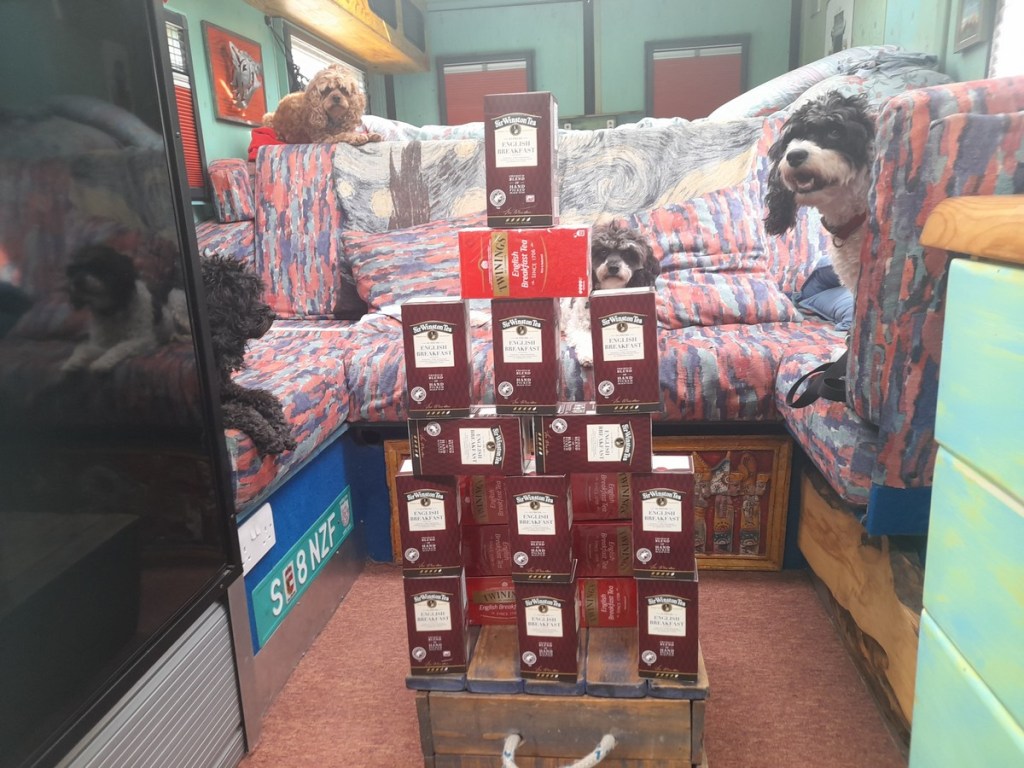
Practicalities – Vehicle
- Vehicle Documents
- V5 – vehicle registration document will be required to cross borders
- Green Card (insurance certificate) – a Green Card is an international certificate of insurance to provide visiting motorists with proof that they have the minimum compulsory insurance cover required by the law of the country visited. 47 countries in Europe, Asia and North Africa participate in the Green Card System and you can obtain a green card from your insurer
- Vehicle Insurance/Recovery Policy – this useful government guide gives an indication of which countries are likely to be covered by your UK policy. Always confirm coverage with your insurer.
- Low Emission Stickers – The Green Zones app shows low emission zones around Europe. e.g. The French Crit’air sticker allows you to drive through certain low emission zones. Apply directly through the official French government website website to avoid scams. The new French ‘simplicity’ law should abolish the Crit’air sticker, but it is not yet in force. Germany requires an Umweltplakette to drive in some cities. Green Zones EU offers guidance for various countries, registration for cities such as Barcelona, and also sells stickers, although in general I recommend going to the country’s official website to obtain these.
- Carnet de Passage – is a ‘vehicle passport’ to allow duty-free temporary import. It is not a requirement in Europe. Since 2015, the RAC no longer issue these: CARS Carnets is the only organization authorised to issue Carnets de Passage in the UK.
- Vehicle Prep
- Maps and GPS – maps are an essential back up to a GPS, and in some countries, are difficult or not available to purchase. We usually have a pre-trip online map and atlas shopping spree with Stanfords of London. We recently replaced our excellent Tom Tom GoCamper GPS with a Tom Tom Go Expert Plus Truck Satnav which has additional functionality and a slightly larger screen. We carry both so we have a back up. They have our vehicle dimensions and weight programmed in, which helps to keep us out of trouble.
- Spares – we carry common spares, such as air and fuel filters, gaskets, spare inner tubes etc. which could be required, but may be difficult to obtain quickly abroad
- Recovery kit – such as waffle-board sand ladders (from eBay), kinetic recovery ropes, shackles/soft shackles
- Tools – we carry a general tool kit, grease and a grease gun, but also specific tools such as a torque wrench for our wheel nuts and the special lever required to dismantle our Trilex wheels.
- Spare wheel(s) – The Overlander’s Handbook recommends carrying 2 spares for more extreme overlanding
- Snow chains if required – see below for winter driving rules around Europe
- Headlamp beam deflectors – a requirement for driving right hand drive vehicles in some countries.
- Tax & MOT must be up to date and last for the duration of your trip
- Check Out Driving Regulations – Your Europe has a guide to driving regulations searchable by country. Always check official sources or embassies for the latest updates and specific rules for motorhomes, vehicles over 3.5t, and trailers/caravans. Take special note of:
- Speed Limits for trucks, trailers/caravans, and vans
- Lights – do you need to drive with headlights or sidelights illuminated?
- Stop Signs – note that in some countries, it’s obligatory to stop regardless of whether the junction is clear of traffic
- Roundabout Etiquette – e.g. sometimes traffic ENTERING the roundabout has priority e.g. the Arc de Triomphe in Paris
- Low Emission Zones – LEZ & ULEZ. The Green Zones app shows low emission zones around Europe. Green Zones EU offers guidance for various countries and registration for cities such as Barcelona, and also sells stickers.
- Sunday Lorry Bans – we have checked directly with the authorities in France and Italy, and they told us this applies only to commercial lorries. We have the emails to prove it, but we often have a day of rest on Sundays, just to avoid any possible conflict with the law
- Signs & Stickers – e.g. a UK sticker is mandatory, Angles Morts stickers for >3.5-tonne vehicles in France, speed limit roundels for trucks, rear hazard board mounted with the lines in the correct direction if carrying items such as bikes on the rear (must be aluminium for Italy!)
- Emergency Kit Required on Board – e.g. Hi Vis vest for all on board must be kept in the vehicle cab, warning triangle (x2 for some countries), spare bulbs, fire extinguisher, first aid kit. Check out this European Emergency kit which contains some of the items required.
- The DGT-approved V-16 Geo-location Warning Beacon for Spain, required on motorhomes now, and other vehicles from January 2026, applies only to Spanish-registered vehicles: foreign-registered vehicles are exempt so long as they carry the warning devices required by their home country. However, I carry one, since it transmits your location and alert status directly to the Spanish traffic authority (DGT) and alerts other road users of an incident without me having to risk exiting our truck to position a warning triangle on a busy road or motorway. This Osram V-16 beacon is DGT-approved. The DGT website lists certified brands and models.
- Bridges, Vignettes & Tolls – Tolls.eu provides an interactive map of tolls and vignettes in Europe
- Strange Rules – e.g. dashcam restrictions or bans and in most of Europe, speed camera detector bans, both of which can elicit heavy fines. In Iran, you can be arrested for driving with a dog in the car. In China, you need to pass a Chinese driving test, or have a guide with you at all times.
- Check You Are Not Overloaded – motorhomes and caravans do not have huge payload capacities, and the consequences of getting this wrong are profound, so this is worth checking. Weigh your loaded vehicle at a public weighbridge before you travel, making sure you account for full fuel and water tanks, LPG bottles, factory & aftermarket extras, passengers, dogs, gear, bikes, tools, crockery & pans, food, drink, spares, and all personal items
- You’re legally responsible for staying within the Maximum Authorised Mass (MAM) and axle weight limits shown on your vehicle’s VIN plate
- Overloading is a Safety Issue – it affects braking distance, steering, suspension, and tyre wear. It increases the risk of accidents, especially on hills, corners, or in high winds
- Overloading Causes Vehicle Damage – It puts excessive strain on axles, chassis, and tyres potentially leading to breakdowns or permanent damage
- Insurance Risk – Many policies become invalid if your vehicle is overloaded, meaning you could be left to foot the bill after an accident
- Fines: Can be much higher in Europe than in the UK — hundreds or even thousands of euros, especially in Austria, Germany, and Switzerland
- Border Delays or Refusal: Border officials may weigh you and refuse entry
- On-the-Spot Fines: In countries like France and Italy, gendarmerie/polizia carry portable weigh pads
- Licence Implications: If you’re driving a vehicle heavier than your licence allows (e.g. MAM over 3.5t on a standard B licence), you’re breaking the law
- Gazole, газоил, Дизел, Motorină, GPL… learn the words for the fuels you use, and take a set of LPG adapters if you have refillable gas bottles
- Road Conditions & Driving Etiquette – We drove across two cornfields and a footpath which were marked on the map as roads in Romania. See my post 12 Tips on Driving & Towing Safely in Romania. The ‘Albanian death road’, the SH74 between Korçë to Përmet, is marked on maps as a main highway, but in reality is a narrow, crumbling dirt road on the side of a precipice!

Winter Tyres
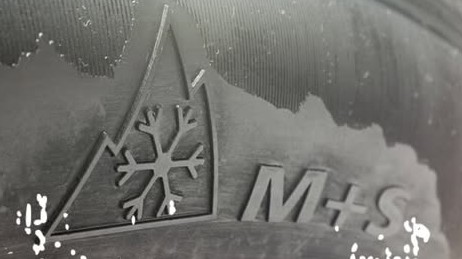
- Winter tyres have special marks on the sidewall
- Some countries specify:
- Winter Tyres OR Chains mandatory on board – e.g. Italy
- Winter Tyres MANDATORY – e.g. Austria
- ‘Vehicle ‘equipped for the conditions‘ e.g. Switzerland
- It can be regional, e.g. mountain regions of France, not the whole country
- It can apply at certain times of the year e.g. Aosta Valley in Italy specifies 15th October to 15th April
- It can apply just to commercial vehicles e.g. Turkey
- Minimum Tread Depth – may be specified
- Studded Tyres may be banned
- Failure to comply could result in a fine & possible immobilisation of vehicle
- Below is a simplified infographic of a very complex subject! I couldn’t find any infographic that was 100% accurate for every scenario, because as mentioned above, regulations can vary within different regions of the same country. It is from the Continental Tyres Website, which is searchable by country, and gives an overview of each country’s requirements. Via Michelin also has a country-by-country summary of winter tyre requirements.

Border Insurance
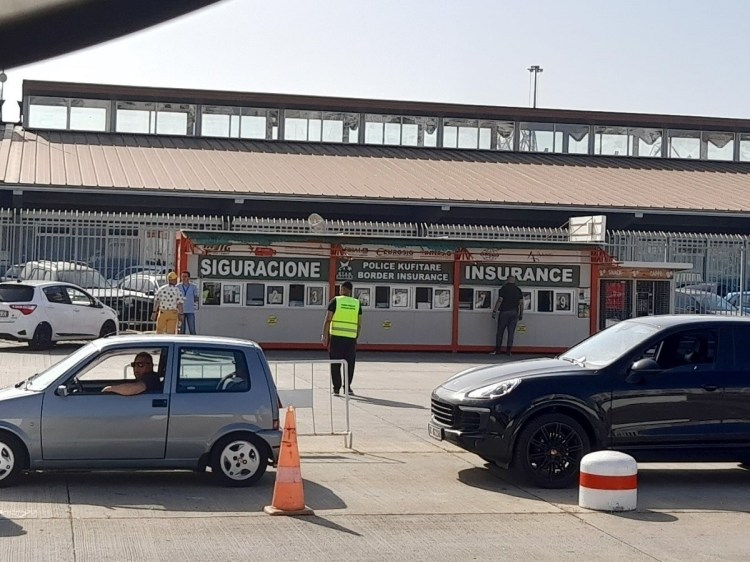
What is border insurance?
- Border insurance is short-term vehicle insurance purchased at a country’s border when your UK policy doesn’t provide cover in that country. Your insurance company will provide a green card, and will also tell you whether your policy covers you in all the countries you want to visit. If you are not covered, you will need border insurance.
- Look for booths marked ‘Siguracione’ or ‘Insurance’ at the border. If in doubt, the border guards will help direct you, since they want to check you have insurance.
- It is typically required for non-EU or non-Green Card countries
- Not all border crossings have insurance bureaux, so check, e.g. Tushemisht in Albania, or Hum in Bosnia and Herzegovina. We crossed there, and had to purchase border insurance in Sarajevo.
- Without border insurance, you can be refused entry, or face fines or serious legal consequences for driving uninsured. Don’t think you can get away without it. You might be lucky, but the borders are all manned and when we exited Bosnia and Herzegovina, a motorist had been stopped for questioning because he had failed to purchase border insurance.
- Border Insurance offers basic third-party cover – so if you’re driving a £300,000 Niesmann+Bischoff motorhome, you might not be prepared to risk it!
- Be prepared to pay in cash, since cards are not always accepted
- The amount you pay varies. We got ‘Special Camper Insurance’ in Kosovo €15 for 15 days: Albania charged €168 for 45 days. We rushed to purchase border insurance at the port as soon as we arrived, but discovered there were many more insurance booths further down the road, which may have offered a better deal.

Final Checks Before You Roll
Travelling overland is one of the most rewarding ways to explore Europe and beyond — but careful preparation is key. Taking time now to get your documents, equipment, and vehicle in order means fewer surprises on the road — and a smoother, safer journey ahead.
Related Posts That May Be of Interest
If you want further advice and information on the reality of living a nomadic life, check out my Top Tips page which has Tips on RV Travel Tips and Going Full Time and How We Did It, as well as my Wuff Guide to Travelling with Dogs. Posts which may be of particular interest for trip planning are:
Tips for Planning the Perfect Trip – top tips on choosing where to go
Are You Ready if Disaster Strikes? 12 Tips on Handling an Emergency Abroad
What Ray Mears Taught Me About Overlanding: Preparation Isn’t Optional
 World Wide Walkies
Congratulations on your successful talks, Jacqueline. You have an absolute wealth of travel information provided here. You’re very kind to take the time to organize the information in hopes of helping fellow travelers. 🙂
LikeLiked by 1 person
Thank you, Nancy.
It has taken us years to amass this information, and we would have certainly appreciated a blog like this when we started out, so I thought it would be useful to share 🙂
LikeLiked by 1 person
My husband always says that part of the road trip is the planning of it! Many of the tips you mention here were also on our list when we recently went to Namibia. Better over prepared with information and documents than to be stuck at a border post. (I might need to remember the dummy wallet tip – that’s very clever). I had a good laugh at your supply of tea – even the dogs look a bit surprised to see it 😁. You are definitely the right one to provide information for overlanders!
LikeLiked by 1 person
I could not agree more – definitely better to be TOO prepared and not need the documents you’ve brought than the other way around.
I’m glad you found the dummy wallet tip helpful. Do you have any tips to share? I’m always keen to learn from other keen travellers.
I am so enjoying your posts about Namibia. It’s somewhere I would LOVE to visit. It just looks amazing.
Thank you for reading and commenting 🙂
LikeLiked by 1 person
I think Namibia will be the perfect country for you to visit – lots of dirt roads! No, I don’t think we can add anything to your comprehensive list regarding travel tips. We don’t travel for such extended periods like you do. Because Berto loves to cook, we always make sure that our food boxes are well stocked (and that there is more than just one bottle of wine 😉).
LikeLiked by 1 person
Actually, Berto’s tip is one that I forgot to add from another talk at the show.
“Always pack 2 bottles of booze in case one breaks.”
Sage advice 🙂
LikeLiked by 1 person
This is so in depth and helpful!!
LikeLiked by 1 person
Thank you so much, Theresa, I’m so pleased you find it helpful.
We do research things to the n’th degree, but you really need to if you don’t want to be caught out. I was really surprised at some of the odd rules, like 1000 euro fines for dashcams, or imprisonment for codeine painkillers, both of which are considered innocuous and are in widespread common usage in the UK.
LikeLike
What a fantastic resource for travellers, all over the world. So much valuable advice here, I particularly like the advice of carrying an old passport and dummy wallet when overseas. Of course no one wants to think they’ll be robbed but you just never know. Congratulations on your successful talks as well Jacqueline. How wonderful and satisfying that must be! Keep enjoying and sharing!
LikeLiked by 1 person
Thank you so much for your kind words and encouragement, Miriam. I am so pleased you found my post useful.
Unfortunately, petty crime is rife, even in some Western European cities – I think Barcelona is renowned for its pickpockets, so unfortunately, you do need to have your wits about you.
I thoroughly enjoyed the talks. 🙂 It’s strange getting back into the swing of it after 10 years out of the corporate world, but although I was nervous, naturally, the audience was lovely and seemed to enjoy what I had to say.
LikeLiked by 1 person