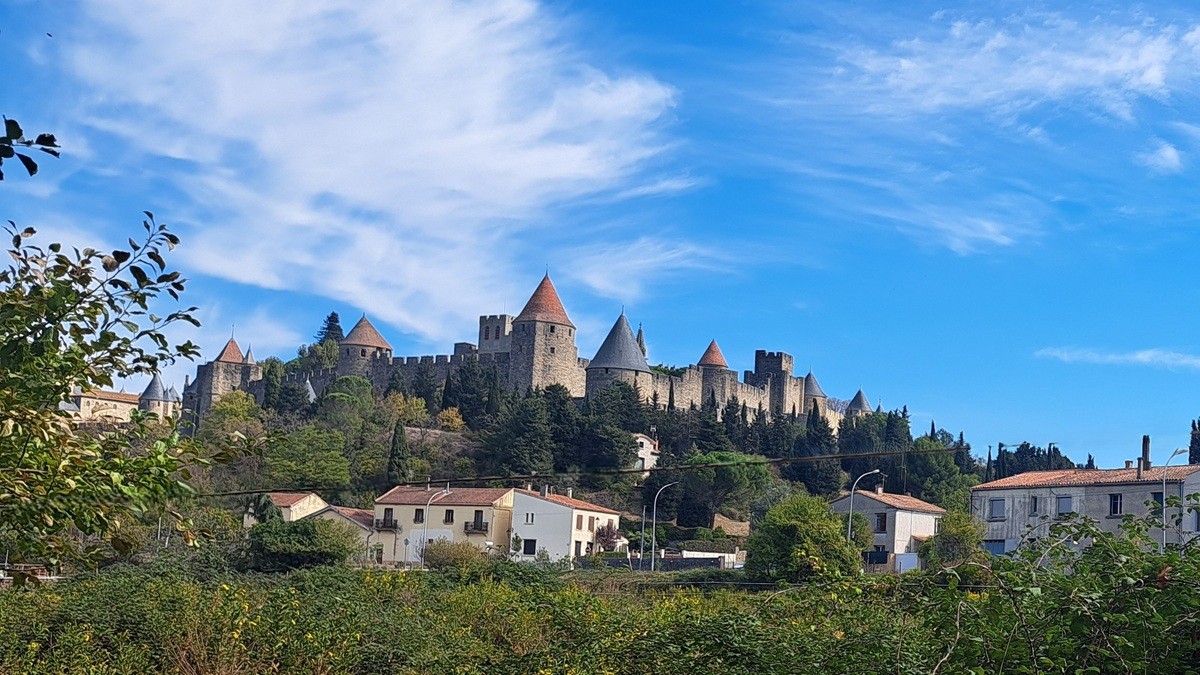
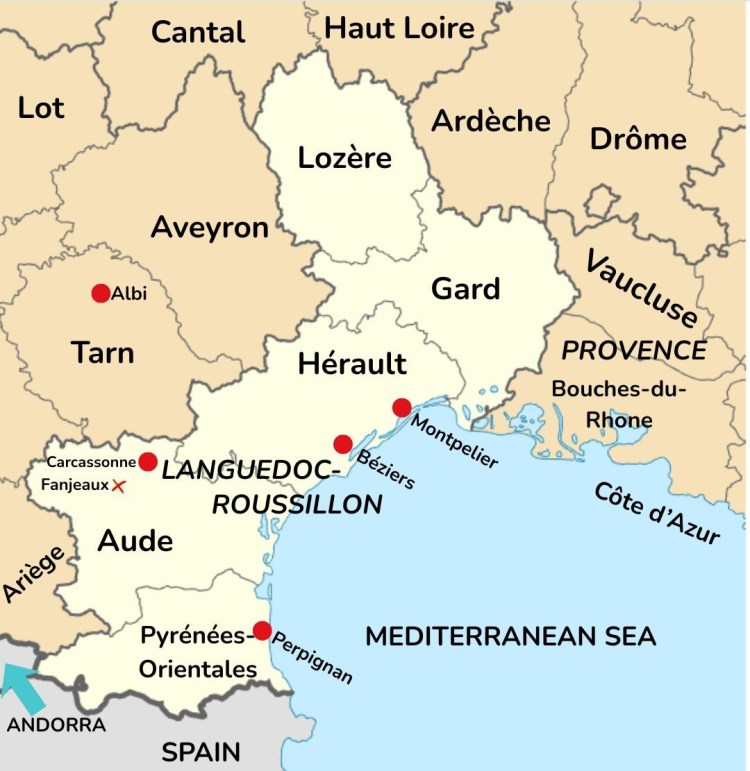
Wrapped around the Mediterranean coast, from Provence to the Pyrenees, lies the French region of Languedoc.
Translated literally, the Languedoc – le langue d’oc – means ‘the language of yes’. In the southern French Occitan language, Oc was the word for ‘yes’, distinguishing it from the northern old French affirmative oil – prounounced ‘oh-ee’ – which eventually evolved into the modern French, oui.
The Italian medieval poet Dante Alighieri was the first person to write down the term lingua d’oc.
In his Latin essay De vulgari eloquentia – On eloquence in the vernacular – circa 1304-5, Dante classified the Romance languages into three groups, based on their respective words for ‘yes’:
Lingua d’òc (Occitan) in southern France, using òc.
Lingua d’oïl (Old French) in northern France, using oïl.
Lingua di sì (Italian and Iberian Romance languages) in Italy and the Iberian Peninsula, using sì.
At the time, Occitan was a major literary language – sung and spoken by the troubadours – prized for its musicality and emotional range. Dante himself even wove eight verses of Occitan into his Divine Comedy, a small but telling tribute to its cultural significance and Dante’s belief that alongside Latin, local languages and dialects had a place in serious literary works.
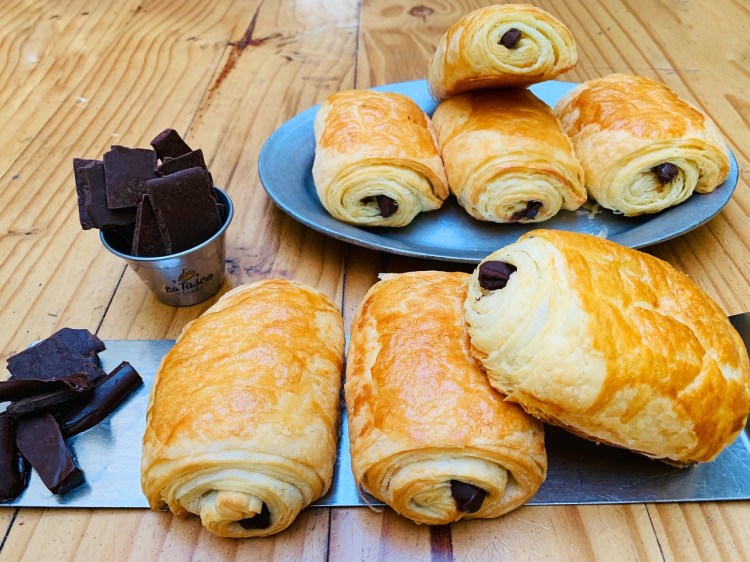
In the modern age, the fierce regional divide over words has not waned; it has simply found a new battleground. One of the most passionately contested linguistic fault lines in France has nothing to do with poetry – and everything to do with pastry. Most of the country munches on pain au chocolat – chocolate bread – for breakfast. However, down south, they call it chocolatine. But this is no mere synonym, it is a buttery symbol of pride and identity so entrenched that rufty-tufty Toulouse rugby fans taunt their opponents with clothing and banners emblazoned with their chilling battle cry; ‘Ici, on dit chocolatine – Here, we say chocolatine’.
Order pain au chocolate in a Languedoc bakery and you court disapproval – perhaps even a refusal – and legend has it that when a Parisian boulangerie labelled its pastries chocolatine, nobody bought them.
When we arrived in the Languedoc, we said, “Yes” – and discovered a land that is diverse, defiant, and slightly feral; its character defined by surf, wind, and mountains – as well as chocolate croissants.
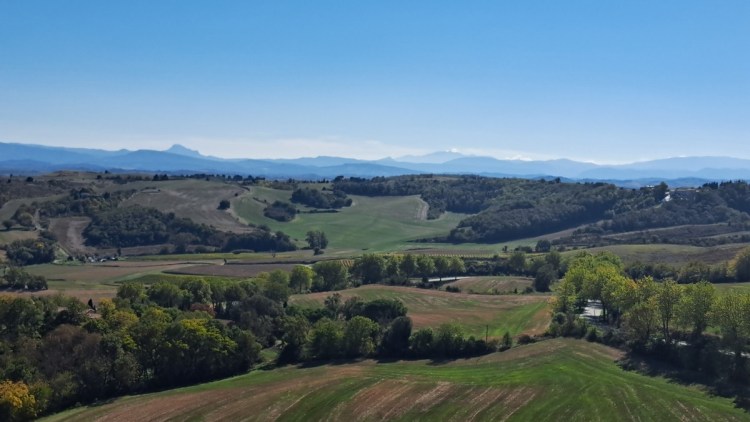
To the north, the Massif Centrale and Cévennes Mountains cradle the Languedoc plain, with the Corbières Mountains slicing off Roussillon to the southwest. To the south, rising to 11,000 ft (3,400 m), the mighty Pyrenees create a dramatic natural border with Spain.
The neighbouring Côte d’Azur was a mild winter retreat for Aristocrats, and became a fashionable summer destination in the 1920s. However, much of the Languedoc’s Mediterranean coastline was a mosquito-infested marshland, home to little more than a handful of fishermen until it underwent large scale development in the 1960s.
Inland, the terrain gives way to garrigue – arid rocky hills of thorny scrub, suffused with the scent of wild herbs: rosemary, thyme, lavender, and sage.
Trapped between mountains and sea, the Languedoc is one of France’s windiest regions, long known as le pays du vent – the land of wind. The famous Mistral, the fierce cold air current that barrels down the Rhône Valley occasionally brushes its eastern fringes near Montpellier. Folklore once held it powerful enough to excuse irrational behaviour to such an extent that legally, a murder committed on the ninth day of a Mistral might be judged a crime of passion, rather than premeditated.
From the west, low pressure over the Gulf of Lion draws the Tramontane south. In the Aude, the Cévennes and the Pyrenees funnel the air to create the Cers – cool and rain-bearing in winter, hot and dry in summer. Fiery red sunsets often signal its arrival – warning locals to batten down the hatches.
In spring and autumn, the southwesterly Marin blows in mists and moisture from the Mediterranean. Its rain is vital to agriculture, but when its humid air collides with the cooler uplands of the Cévennes and Montagne Noire (Black Mountains), it can trigger violent thunderstorms and devastating floods called épisodes cévenols. In Languedoc, they say, “It never rains – it pours.”
A continuation of the Marin, the Autan, accelerates between the Pyrenees and Montagne Noire near Toulouse. It is known locally as the ‘devil’s wind’ or ‘le vent qui rend fou – the wind that drives you crazy’.
As we discovered, every valley seems to have its own temperament, and it’s little wonder that Languedocians learned long ago to respect the wind – and blame it occasionally for losing their minds.
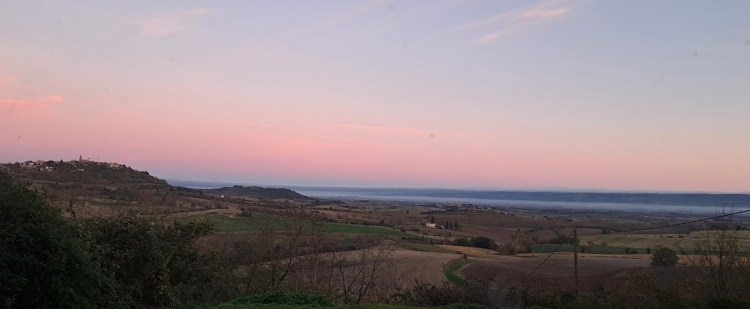
Beyond the weather, this colourful, aromatic landscape of rolling hills was shaped by rebellion, religious dissent – and romance. It is, after all, the homeland of the troubadours – the medieval lyric poets who sang of chivalry, honour, and courtly love. It is scattered with castles clinging to vertiginous cliffs – built in defiance of both gravity and authority.
It’s a place with a long memory – where the Med meets the mountains, and is garnished with medieval grit.
Before I visited, I knew the Languedoc largely as a wine region – and with good reason. It is France’s largest wine-producing area. For decades, it was associated with rough-and-ready table wine, produced in vast quantities. More recently, however, it has reinvented itself – reducing volume, improving quality, and quietly crafting wines that rival those of Bordeaux – often at a fraction of the price.

Here, wine is inseparable from the terroir that produces it. Garrigue doesn’t simply refer to the terrain; it’s also a tasting note. In Languedoc, the term garrigue describes wines that carry the flavour of the wild herbs, dried grasses, and sun-baked limestone of the Mediterranean hillsides, infused with heat and lashed by wind. It’s proof that the landscape doesn’t merely surround you; it seeps into your glass and evokes the scented, scorched, and wind-scoured hillsides.
Figures vary, but the Languedoc is frequently cited as producing approximately a third of France’s wine, and by some estimates, accounts for close to one in ten bottles drunk worldwide!
Yet, for all its abundance, the Languedoc doesn’t shout. Vineyards roll out among low hills. Medieval stone villages appear, then vanish again. Castles stare down from the heights. But beneath the appearance of calm, there is history. Not the polite, palatable kind sung about by troubadours, but the uncomfortable sort involving heresy, persecution, and an entire culture erased.
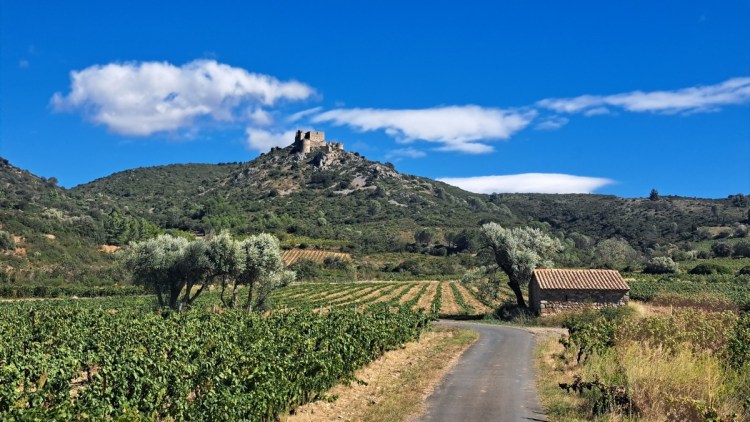
The Languedoc is Cathar country.
Before we arrived, I’ll admit I had never heard of the Cathars, and certainly hadn’t grasped how deeply their story is etched into the landscape. But once you’re in the area, you don’t just learn about the Cathars: you walk their roads, climb to their refuges, and stand where faith, power, and survival collided with devastating consequences.
The Catholic Church declared the Cathars heretics for beliefs that rejected materialism and emphasized spiritual purity – their name originates from the Greek katharos, which means ‘clean’ or ‘pure’. Their worldview feels surprisingly modern – and oddly aligned with our own preference for less STUFF and more meaning.
Yet, in 1209, Pope Innocent III ignored a couple of major commandments to unleash a murderous campaign of genocide against the Cathars in southern France. Promised Cathar lands, northern French nobles descended on the region and started the Albigensian Crusade. (The city of Albi was a prominent centre of the Cathar movement, so the Catholics called them ‘Albigensians’.)
The violence was brutal, with mass burnings and entire cities razed to the ground. At Béziers, Arnaud Amalric, a Cistercian abbot, no less, sacked the city and massacred every man, woman, and child. When asked how to distinguish the Catholic population from the Cathars, Amalric had allegedly instructed his forces, “Kill them all! God will know his own,” – so they even slaughtered the cathedral clergy in front of their own altar. In a letter to the Pope, he boasted that he’d put 20,000 people to the sword in Béziers, in what remains one of medieval Europe’s bloodiest episodes.
“Thou shalt not kill. Thou shalt not steal. Love thy neighbour and do not covet his ass – and definitely not his land…”
Don’t you just love religion!
After two decades of persecution, chaos, and bloodshed came order – imposed, planned, and measured. During the 13th and early 14th centuries, kings, nobles, and local lords founded around 700 fortified bastide communities across southwest France. These ‘new towns’ were designed to concentrate the population, stabilise the war-torn region, revive trade – and make it easier to tax all the profits this would bring!
Bastides were laid out as grids centred on an arcaded market square. This strategy allowed revenue to be drawn increasingly from commerce – markets, rents, and tolls – rather than relying solely on uncertain levies or tithes from agricultural production. The orderly layout of streets and plots made tax assessments and collection stupendously efficient!
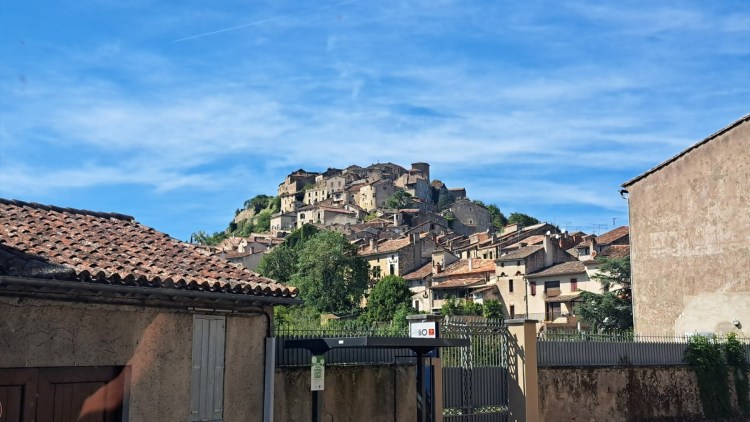
Today, these bastides are some of the most quietly beautiful villages in France – perfect for a wander through medieval streets, browsing lively weekly markets, or simply nursing a coffee beneath an ancient timber-beamed arcade as the world drifts by.
We moved slowly through all of this: stopping in towns that never make glossy itineraries, clambering up to ruined fortresses that demand sturdy shoes and a head for heights, and lingering longer than planned in areas that simply felt good. We also had a three-month break from travelling in a beautiful farmhouse near the medieval town of Fanjeaux, home to St. Dominic, who founded the Dominican order and preached to the Cathars.
In the posts that follow, I will write about the Cathar strongholds we visited and the people who hid in them. I will introduce you to some of the glorious bastides, designed with mathematical precision and population management in mind. And of course, I will sample many fine local wines on your behalf…
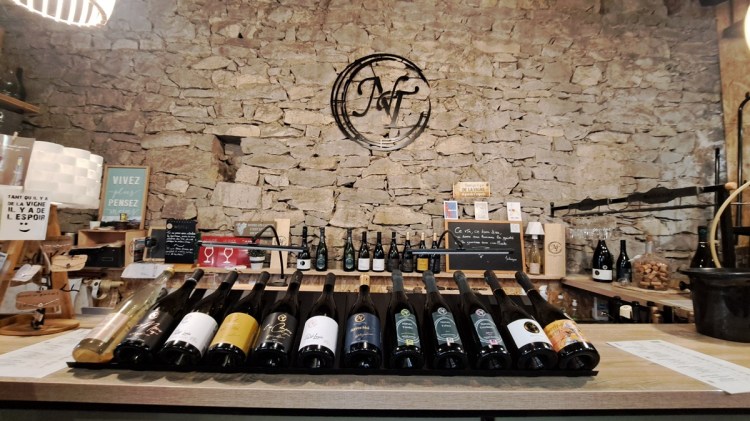
It won’t be a comprehensive guide or a checklist – merely a collection of places we explored and the stories that stayed with us. I’ll explore why this defiant corner of France feels so different from the lavender fields of Provence, and what it’s like to travel through a part of Europe that rewards patience rather than speed.
So, if you appreciate a destination with layers – somewhere that asks you to slow down, look closer, and listen harder – then southwest France might get under your skin the way it did ours.
Enjoy Reading?
Come Truckin’ With Us – Get Outdoors Through Your Inbox!
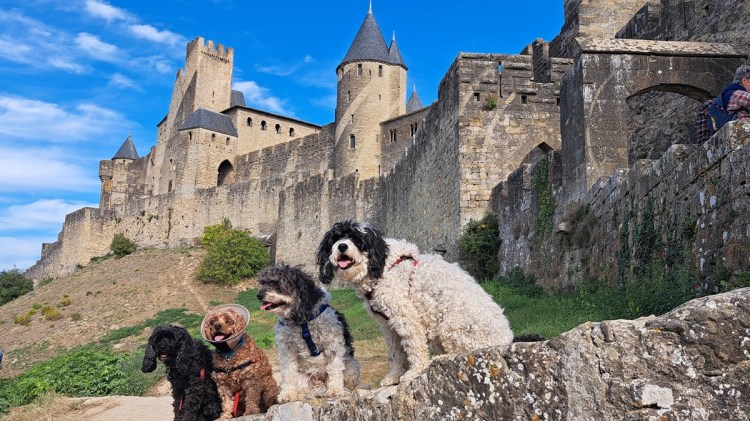
Cover photo – The Fab Four at Carcasonne. Ruby had an op to remove a skin tag from her eye, but she is fine and dandy now!
 World Wide Walkies
Très bien, Jacquie! I always enjoy how you mix history with your travels. I have heard of the Cathars, and now you’ve opened a new rabbit hole for me to explore:) Happy New Year to you and the gang and safe travels! À santé !
LikeLike
What a lovely region to explore. I had heard of the Cathars, but just vaguely had in my mind something mysterious about them. Why do so many humans, or at least people in powerful positions, think it’s okay to slaughter and persecute others.
LikeLiked by 1 person
I have no idea why a religious person who subscribes to a belief system that God made us all in his image and that you must love your neighbour, not covet their possessions, or kill, thinks it’s perfectly fine to participate in wholesale slaughter in the name of that God just because someone seeks the same God with a slightly different belief system.
Looking at the world at the moment, prejudice and violence are perhaps just part of the human condition…
It is a gorgeous region – so much to see and do, and UNBELIEVABLY friendly! We are really enjoying our time here – we’re still around waiting for my dental appointment 🙂
Give my love to Southbourne!
LikeLiked by 1 person
Southbourne sends its love.
LikeLiked by 1 person
What a most wonderful tour and history too! I’ve been to France, but never the south. Looks heavenly. Thank you for sharing this beautiful area of France with us. 💜
LikeLiked by 1 person
It’s our first time in this part of France and we’re lovin’ it! I can’t wait to share all the fabulous places we’ve visited.
Thank you for dropping in and commenting, Debby 🙂
LikeLiked by 1 person
My pleasure Jackie! 🙂
LikeLiked by 1 person
Thanks for the tour of France, Jacquie. Its countryside is absolutely beautiful and such a contrast to its cities. 🙂
LikeLiked by 1 person
My absolute pleasure, Nancy. France is a stunning country and so diverse. I’m looking forward to sharing its magnificence! 🙂
LikeLike
What a fabulous and very interesting blog Jacquie. Thanks so much for the tour. Carcassone is one of those places that I’d love to visit althogh the history is horrific!
LikeLiked by 1 person
The history is truly horrific.
However, the sites are very beautiful and so interesting.
LikeLike