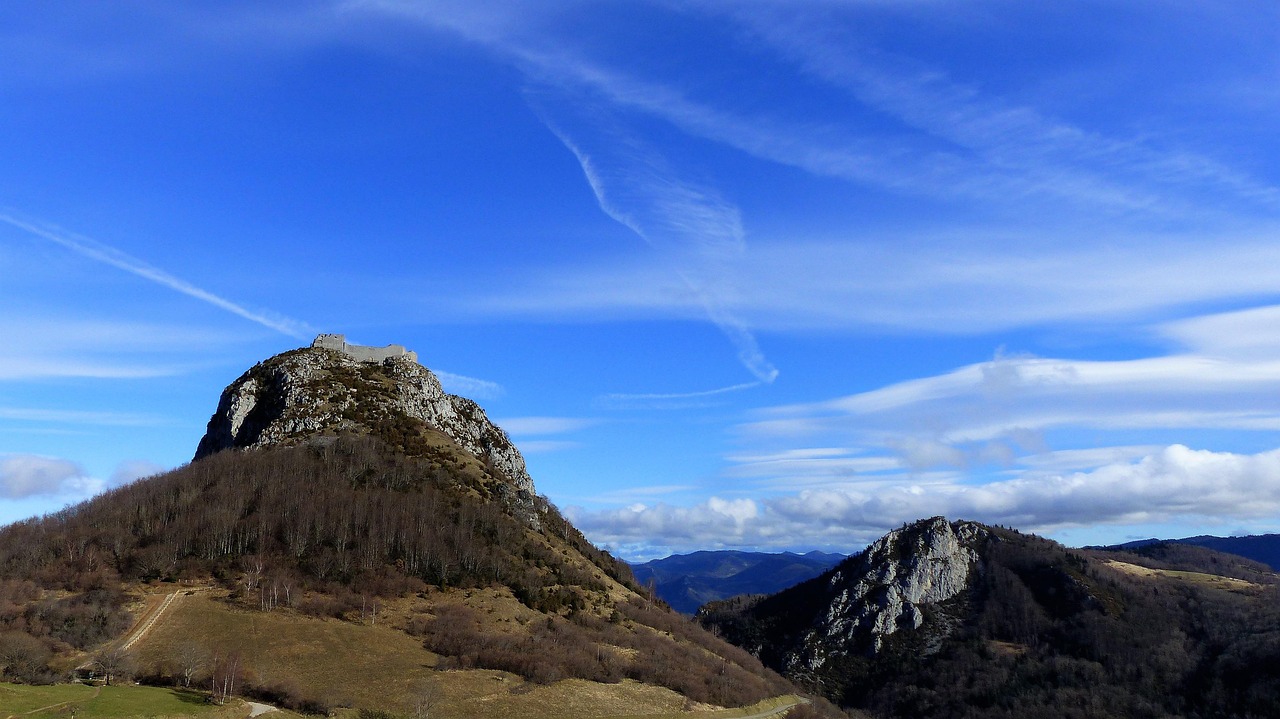
I read that in cycling terms, the Col de Montségur is a Category 2 mountain pass, popular with those slender, Lycra-clad aliens who chase gradients for glory. The same article revealed it to be known for scenic views, the highlight of which is a spectacular perspective of a historic castle ruin. Perched atop a pog – a knuckle of rock rising from the land like a huge pudding-shaped dumpling – the mountain itself propels the fortress of Montségur skyward.
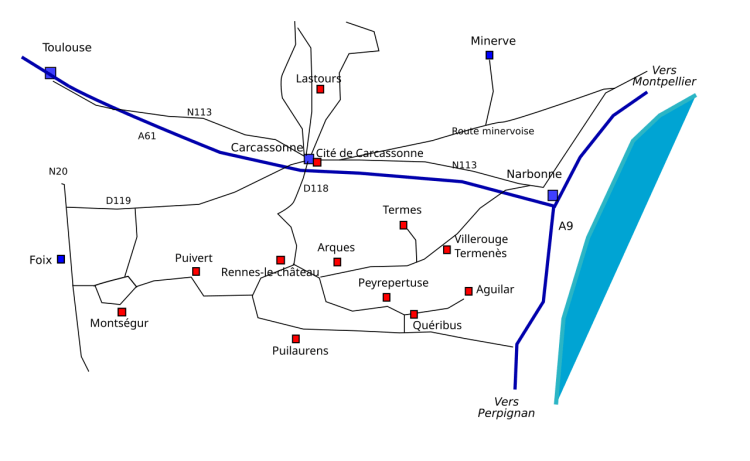
Image courtesy of Wikimedia. This file is licensed under the Creative Commons Attribution-Share Alike 3.0 Unported license and the Creative Commons Attribution-Share Alike 2.0 Generic license.
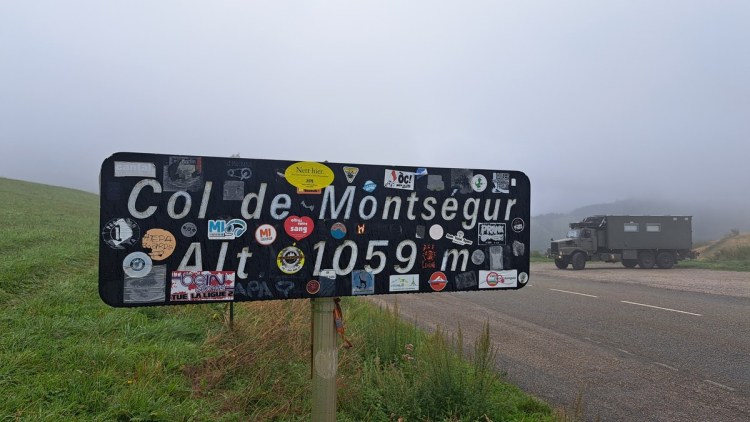
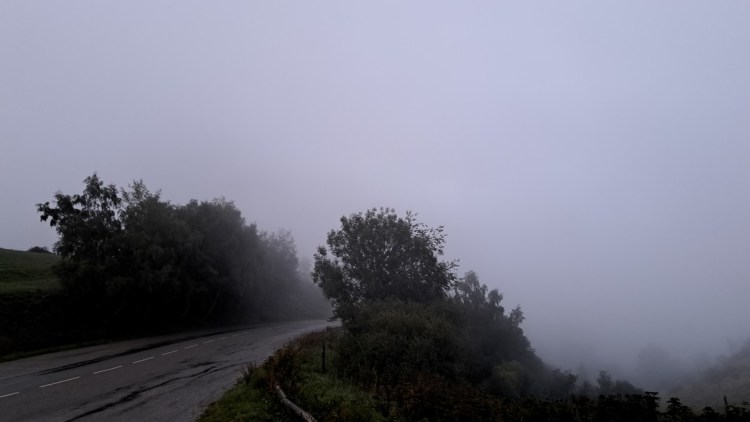
The day we arrived, the Col offered neither tableaux nor triumph. Only cloud – of the solid, enveloping, can’t-see-the-end-of-your-bonnet type. It seemed as though we’d climbed into the sky itself, and as we parked at the highest point of the pass, we could see precisely – nothing.
At this point in our Languedocian journey, I had only just heard of the Cathars – an Eastern religious movement that rooted itself in southern France during the Middle Ages. Parked beneath one of the region’s most symbolically charged rocks, this was rather embarrassing. The blanket of cloud and rain concealed a history so heavy you could almost feel it exhale.
En route, we’d passed through the hilltop city of Fanjeaux – another Cathar stronghold – and a place we were excited to see for the first time. After close to a decade of full-time travel, we planned a proper pause from life on the road – and had booked a farmhouse near there for the winter. So, this time, there was no need to stop – we knew we’d be back to do it justice.
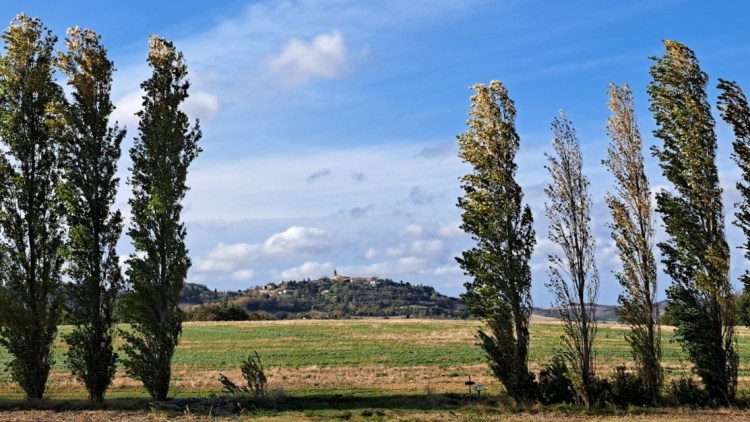
In Mirepoix, a town rebuilt on the plan of a bastide new town after a devastating flood in 1289, I spotted a roadside patisserie with a Beast-sized parking space opposite. Delighted, I raced across to fill my bag with bread, cake, flan, and two absolutely heroic wheels of pain aux raisins. Our early start from Cordes-sur-Ciel to avoid driving in the heat of the day meant we were settled at our destination by 11.30 a.m. Not that heat posed a problem as we ascended into the mountains. At 3,500 ft (1059 m), the top of the pass was cool, damp, misty, and moody. I love the mountains like that – all brooding and mysterious – but I would have liked to have at least caught a glimpse of the legendarily spectacular and iconic château we’d come to see!
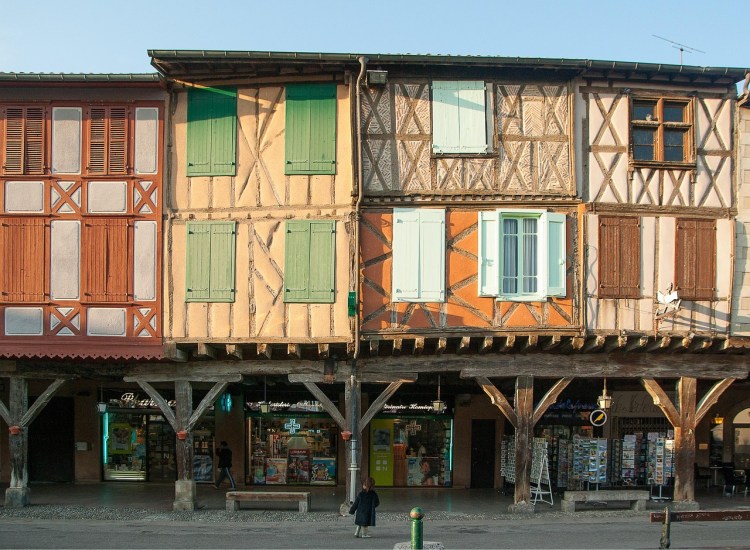
Image by jacqueline macou from Pixabay
The footpath up to Château de Montségur is steep, narrow, and edged with sheer drops. In clear weather it’s dramatic, but it’s not one to tackle in poor visibility with four dogs. So we waited. And waited. We kept ourselves occupied – I got on with some writing, hoped, and pleaded with the weather gods – but the mist stayed put all day.
At around 8 p.m., while we were listening to the BBC radio comedy Just a Minute, the cloud suddenly lifted. For ten glorious minutes, Montségur revealed itself: the ruined citadel balanced improbably on its knoll.
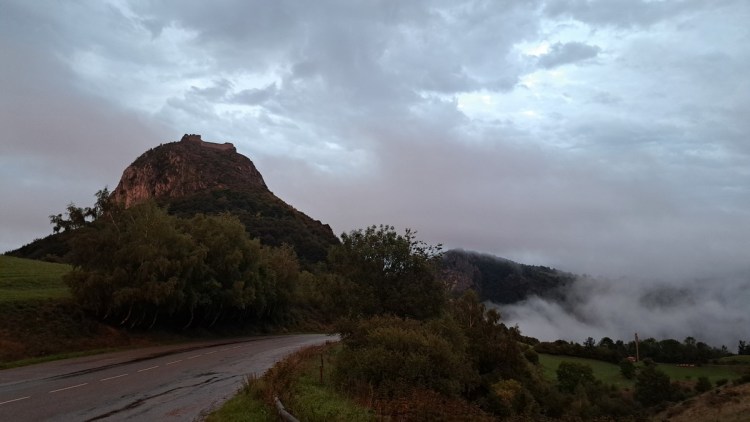
Then it vanished again.
Those few minutes were all we got – but it was a treat in more ways than one
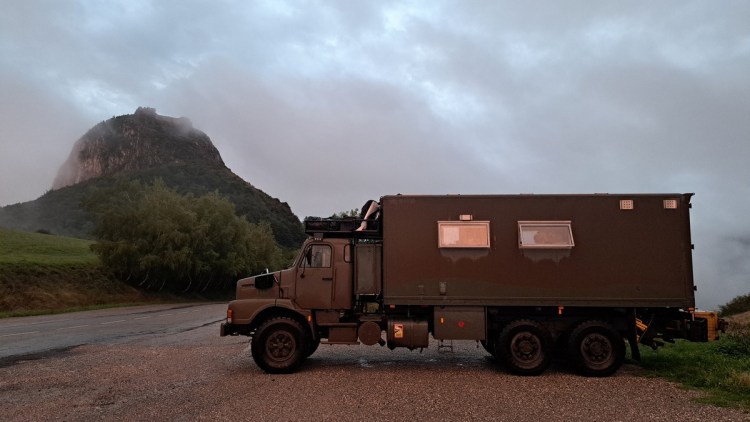
Mark and I are great fans of immature geography. Over the years, we have climbed many mountains named after lady lumps. Mam Tor, the Pap of Glencoe – and we’ve observed the vertiginous Cioch or ‘breast’ on Skye from a safe distance.
Montségur definitely belongs in this tradition.
Although some would argue that ‘Mont Ségur’ translates as ‘secure mountain’, Mark and I both agreed that it is undoubtedly a boob.
A dramatic, defiant, proudly upstanding, single bosom, wreathed in a lacy brassiere of cloud.
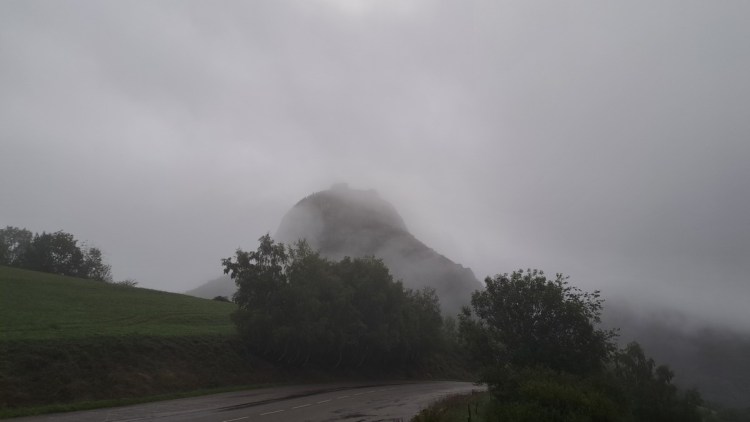
That night, it rained hard enough to make me worry about our descent. I’m glad I wasn’t fully aware of what the road ahead had in store – or I would not have slept a wink!
The following morning, a couple from the small van next door came over for coffee. Carolyn and Andy had spotted the Scottish flag on the back of The Beast and made a cheerful reference to the grey mizzle outside the windows.
“This is exactly like Scottish weather!”
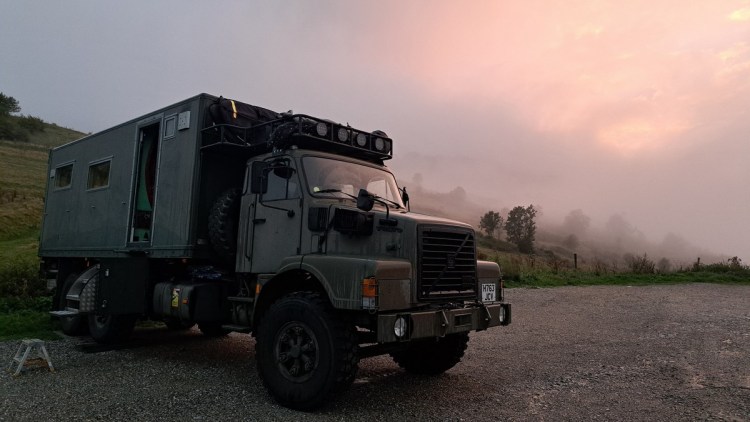
We concurred – though they found it hilarious that we were sporting shorts and T-shirts while they were wrapped in down jackets and beanies. I maintain that unless it is freezing, skin does not get waterlogged – and dries much faster than fabric.
So shorts are the most practical wet-weather gear!
Further explanation for their Arctic attire came when they told us they lived on Tenerife, whose climate is somewhat milder than England’s. They had left for a couple of months of road-tripping, so we compared routes. Since we were on our way to Africa, we picked Andy’s brains. He told us he had cycled through Mali, Mauritania, and Senegal, from where he was evacuated during COVID. “I flew to Bergen in a military plane, and experienced the joy of going from +40°C in Africa to -15°C in Norway!” THAT would necessitate a downie and a beanie!
We’d been warned against visiting Mali, but Andy said the people everywhere were wonderful. Sadly, it’s inevitably the regimes that cause the problems and make it dangerous for travellers. “Mauritania was an experience,” he said. “There’s nothing there – and surprisingly, everything is expensive. Part of the problem is that they have to export things like fish for processing, then re-import them at a premium.”
We shared my Mirepoix cake, and I showed them the photos of the castle because they hadn’t managed to see it. “Look at what you could have done…” Given the weather, it looked like my photos were the best view they would get.
Eventually, they headed off into the mist to walk their pup, and we fired up The Beast to begin our descent – down the hairpin bends of destiny, with slightly clenched buttocks beneath our metaphorical kilts.
It was only later, when I did some further research about the Cathars, that I grasped the full significance of where we’d been.
Montségur wasn’t just another dramatic ruin. During the Albigensian Crusade – the brutal campaign launched by the Catholic Church and the French crown to eradicate ‘heresy’ in Languedoc – it was a major Cathar stronghold.
The Cathars believed in a dualist world that was created and governed by two opposing forces which were locked in perpetual conflict. A good ‘god’ and his evil rival – much like the Christian idea of God and Satan. In this, as is so often the case with religion, Cathar beliefs were distinct from – but not too far removed – from the beliefs of mainstream Christianity.
However, Cathar doctrine diverged from Christian teachings in a number of important ways. Their god was both male and female. The female aspect ‘Sophia’ represented wisdom, and this encouraged gender equality in Cathar communities. They believed in reincarnation: that a soul would be reborn until it relinquished the material world and existed solely in a spiritual state. As such, they encouraged celibacy because birth condemned another poor soul to be imprisoned in a body, trapped in the devil’s material world.
I imagine their biggest sin, though, was to criticise the Catholic Church. Cathars were largely vegetarian, lived austere lives, and believed in manual labour for everyone. They disparaged the Church’s wealth, along with its clergy’s greed, hypocrisy, and lechery. Unsurprisingly, this did not curry favour with Rome.
The Roman Catholic Church condemned Catharism as ‘The Great Heresy’ and declared that Cathars were not even Christian.
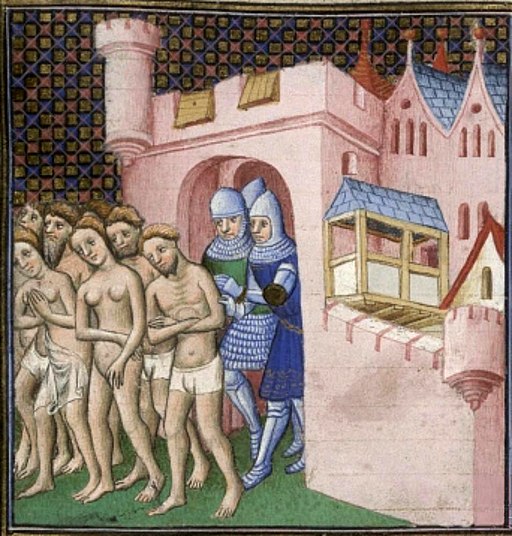
Workshop of Master of Boucicaut, Public domain, via Wikimedia Commons
In the first half of the 13th century, Montségur withstood three sieges. However, it was such a vital Cathar refuge that in 1243, the French king sent ten thousand troops to subdue its defensive force of little more than a hundred.
Pierre-Roger IX of Mirepoix, a seasoned soldier who may – or may not – have been a Cathar himself, defended the fortress. Opposing him was his long-standing enemy, Guy de Lévis, a crusader lord who had already seized Pierre-Roger’s lands.
It took ten months, but finally the besieged castle fell.
At the end, Pierre-Roger did negotiate a remarkable fifteen-day truce. He secured safe passage for his soldiers and a window for the Cather treasure to be removed. However, the terms of the surrender gave the Cathar faithful a stark choice: renounce your faith or be burned at the stake.
More than two hundred Cathars – men, women, and children – refused to recant. They were marched down to a field at the foot of the mountain, now known as the Prat dels Cremats – the Field of the Burned – and were burned alive in a mass execution. Some accounts suggest they sang as the flames rose.
Pierre-Roger survived, but faded into obscurity. Guy de Lévis became lord of Montségur.
Fans of heavy metal music may already be familiar with this story. London-based rockers Iron Maiden referenced these events in a track entitled Montségur on their Dance of Death album.
Standing beneath that mountain, even wrapped in mist, the weight of such a brutal episode is hard to ignore. And as if all that real history weren’t enough, Montségur’s misty heights have attracted many layers of legend.
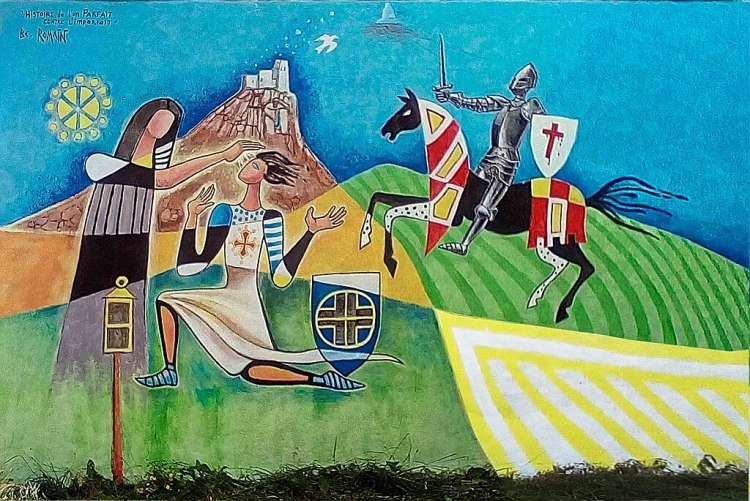
CC BY-SA 4.0 https://creativecommons.org/licenses/by-sa/4.0, via Wikimedia Commons licensed under the Creative Commons Attribution-Share Alike 4.0 International license.
The Inquisition recorded evidence of Cathar treasure, which some believe included the Holy Grail. Did the Cathars remove the Grail – or is it still hidden within the castle?
This mythology fascinated a German SS officer and archaeologist, Otto Rahn, who believed Montségur to be the legendary ‘Grail castle’. He wrote two books about it: The Grail Crusade and The Court of Lucifer. During the Second World War, German soldiers did excavate the site, perhaps funded by the Nazis. Heinrich Himmler certainly had a fascination with the occult and presented Hitler with a copy of The Court of Lucifer as a birthday gift.
Other stories suggest the site was sacred long before the Middle Ages, and possibly linked to a sun cult. The castle’s alignment marks the solstices with millimetre precision. At the winter equinox, the sun’s first rays bisect the castle, while in summer, they thread together arrow slits on either side of the keep. However, the Cathars did not build religious structures. In any case, the current ruins date from a later period – and reportedly, a similar phenomenon occurs at the nearby Château de Quéribus. Perhaps it’s just a tribute to the medieval architects, who oriented their buildings with purpose, but perhaps not with sun worship in mind.
There’s no hard evidence for any of this – but then Montségur is not somewhere that needs proof. It feels older, stranger, and more significant than a mere monument in stone.
When you visit, some places don’t reveal themselves all at once. Some make you work and do your research. They wrap themselves in cloud and mystery, then say, come back when you’re ready.
Montségur is one of those.
Join us next time to see what happened on our buttock-clenching descent with a terrified a hitchhiker.
Cover image of Montségur on a clear day by claude alleva from Pixabay
Did You Miss?
Below are links to the other posts in my Cathar Country series about the Languedoc in Southern France.
Bargain Book!
For the last few days of January 2026, my award-winning Romanian road trip memoir is still on a Kindle 99p deal on Amazon UK. Why not pick up a copy – or read FREE with Kindle Unlimited.

Find all my other travel books via the links below:
Enjoy Reading? Never Miss An Update!
Come Truckin’ With Us – Get Outdoors Through Your Inbox!
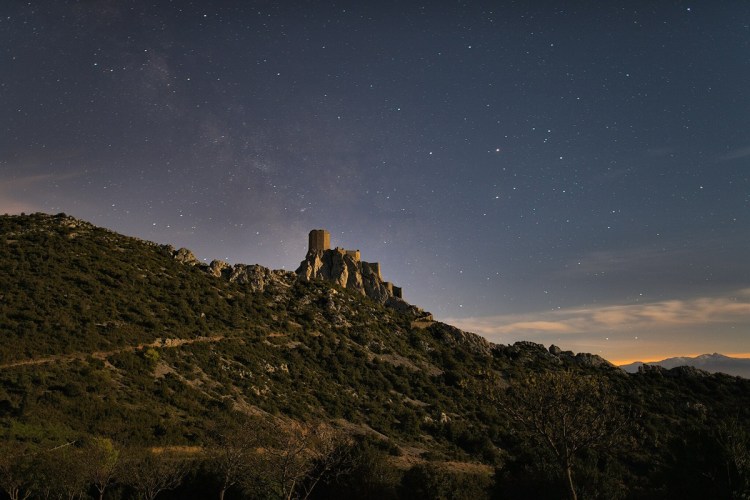
Image – Château de Quéribus PhilippeContal, CC BY-SA 4.0 <https://creativecommons.org/licenses/by-sa/4.0>, via Wikimedia Commons licensed under the Creative Commons Attribution-Share Alike 4.0 International license.
 World Wide Walkies
So much cloud. What a shame to miss all those special mountain views. Still, I can imagine it would have been quite moody and mysterious. I have to agree with you about shorts being the best wet weather gear, skin definitely doesn’t get waterlogged – and it does dry faster than fabric. An entertaining read. Here’s to the sun coming out!
LikeLiked by 2 people
Thank you, Miriam! A bit of sunshine is always welcome.
We will go back to Montsegur sometime, but we’ll check the weather first.
Thank you for reading and commenting – I’m so glad you enjoyed the read. 🙂
LikeLiked by 1 person
That was an interesting blog,. I didn’t know much, actually anything, about the Cathars. It makes me wonder how many religions originating from Christianity have been brutally supressed and would probably have been better.
LikeLiked by 1 person
It’s hard to know, isn’t it? So many religions around the world are broadly similar, but pit themselves murderously against each other. It’s one of the reasons I hate religion. On the one hand, it preaches tolerance and morality, but in the other it wields a dagger that it’s prepared to use for nothing more than disagreeing over which version of the man in the sky you belive in.
LikeLiked by 1 person
Great post, Jacquie! Im always down for a bit of history…and you relate it well!
LikeLiked by 2 people
Thank you, Donna, that’s good to know. I find it very interesting but I have been criticised for too much exposition in my writing!
However, I like it, so it stays 🙂
LikeLiked by 1 person
I can totally relate to your disappointment when the view from the Château de Montségur was smothered in clouds. In 2016 our family drove up to see the Grand Canyon in Arizona. The misty rain and fog was so thick we couldn’t see the end of our noses. 🙂
LikeLiked by 1 person
Oh NO! That must have been terribly disappointing to miss the Grand Canyon! And that’s not the weather one might expect in Arizona.
At least we got to see the castle for 10 minutes…
Thank you for reading and commenting. Nancy.
LikeLiked by 1 person
Fascinating blog Jackie, what a tragic history the Cathars had, It’s certainly an are woth exploring! Love the photos. Rebecca x
LikeLiked by 1 person
Thank you for reading and for your kind words, Rebecca. The events are tragic, but it’s been interesting finding out the history, and the surrounding area is wonderful. xx
LikeLike
Hi Jackie, I love the stories about your visit to the South of France. My first trip to France was a small tour of that region. The Nazis also thought the Holy Grail was hidden in the Big Well at Carcassonne. The Cathar story is fascinating. Did you visit Rennes-les-Chateau? There’s a wonderful mystery about what the old priest found hidden underneath his Church. A BBC producer, Henry Lincoln made several documentaries in the 1960s about the mysteries. He and two others wrote a best seller called Holy Blood Holy Grail twenty years before Dan Brown ripped off the plot for The DaVinci Code. D
LikeLike
We missed out on Rennes le Chateau, but I’m sorry we did now! I didn’t know the mystery behind it and was unaware of the BBC documentaries. I shall have to look them up. Val recommended Holy Blood Holy Grail too – I shall heva to check it out. It sounds like a brilliant read. Thanks for the recommendation 🙂
LikeLike
Hi Jackie, I love that whole area of France and its Cathar history does indeed gice it a loaded atmosphere. I haven’t been to Montségur, which looks fantastic and very alluring in the mist there. However, I have been to Rennes le Chateau, which has a similar mystery concerning the Holy Grail. If you ever get the chance to go and visit the church there, do so! It is very strange and the story attached to it prompted the book The Holy Blood, The Holy Grail, which I used to have. It’s quite a tome and involves the history behind the Cathars and their beliefs. Fascinating! Here’s a link to the book: https://a.co/d/cYRQzWt
I’d love to explore all the Cathar castles too, but their history is so brutal and so tragic I sometimes find it hard to digest.
LikeLiked by 1 person
PS, the Rennes le Chateau story is weird, not because of Cathar history, but because the church is so bizarre and because no one really knows where the money came from to restore it. However, the book ( and also numerous fictional stories and films) all involve Cathar history. Don’t go there in summer, though. It’s very touristy! Winter would be a better time.
LikeLiked by 1 person
Hi Val – thank you so much for the link to the book. I shall have to read that! I’ve become quite fascinated with the Cathar history – I can’t believe it’s something that completely passed me by until I came to this region of France.
I agree, the history is pretty hard to digest, but it’s important to remember it and see the damage that can be done in the name of religion – not that the human race ever learns from the past.
The other Cathar castles are well worth a visit – my favourites were Queribus and Peyreperteuse – which are coming up! They were truly spectacular. 🙂
LikeLike